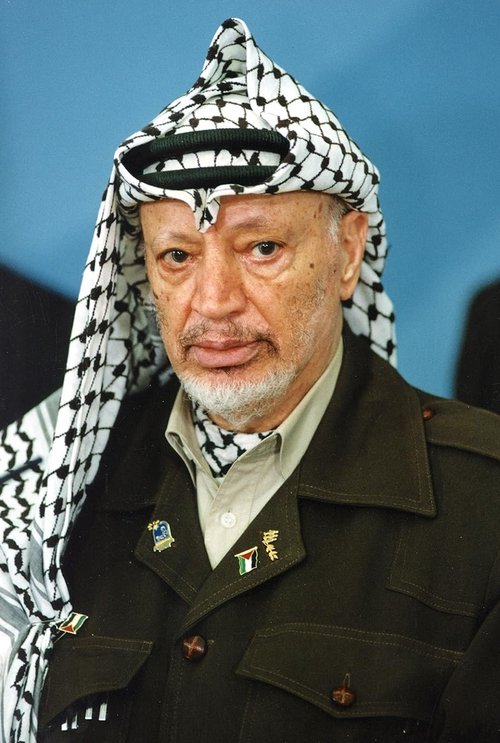
Yasser Arafat
Yasser Arafat, originally named Mohamed Abdel Raouf Arafat al-Quudwa al-Husseini, was born on August 24, 1929, in Cairo, Egypt, and passed away on November 11, 2004, in Clamart, France. Known affectionately as Abou Ammar, Arafat was a prominent Palestinian activist and statesman, serving as a pivotal figure in the Palestinian national movement for decades.
As the leader of Fatah and later the Palestine Liberation Organization (PLO), Arafat played a crucial role in articulating Palestinian aspirations. His prominence peaked during the 1990s when he emerged as a key participant in peace negotiations with Israel, culminating in the signing of the Oslo Accords in 1993. This historic agreement paved the way for Arafat to become the inaugural president of the Palestinian Authority. His efforts in promoting peace earned him the Nobel Peace Prize in 1994, shared with Israeli leaders Shimon Peres and Yitzhak Rabin.
However, Arafat's later years were marked by challenges, as he faced criticism from members of his own community for corruption within his administration. Following the 2000 Taba summit breakdown and the onset of the second intifada, Arafat's influence waned, leading to his isolation in Ramallah under the Israeli government led by Ariel Sharon. His life concluded in Clamart, where he died at the age of 75. Posthumously, Arafat's remains were exhumed in 2012 to investigate claims of polonium poisoning, a subject of much debate among scientific teams.