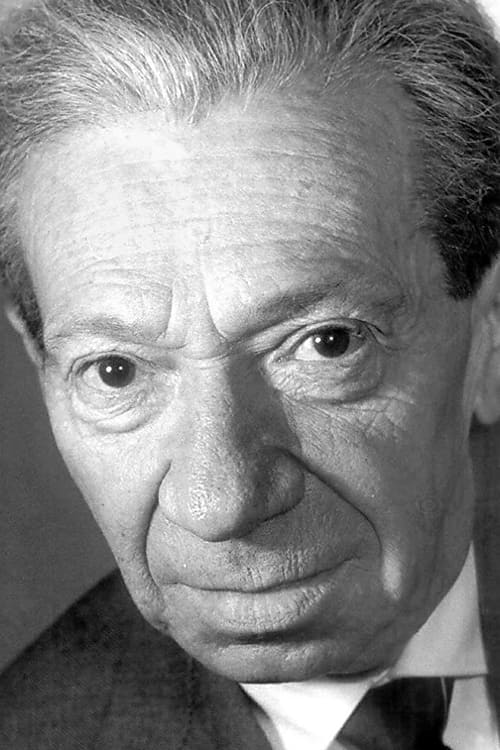
Friedrich Hollaender
Friedrich Hollaender, also known as Frederick Hollander during his years in exile, was a distinguished German composer and author, born on October 18, 1896, in London. He came from a family steeped in music and the arts; his father, Victor Hollaender, was a noted operetta composer, and his uncle Gustav directed the Stern Conservatory in Berlin. The family relocated to Berlin in 1899, where Hollaender honed his craft in Engelbert Humperdinck's master class while simultaneously performing piano for silent films, nurturing his talent for musical improvisation.
By 18, he served as a répétiteur at the New German Theatre in Prague and entertained troops on the Western Front during World War I. After completing his studies, Hollaender became prominent in Berlin's Kabarett scene, collaborating with notable figures like Kurt Tucholsky and Mischa Spoliansky. His marriage to actress Blandine Ebinger in 1919 ended in divorce in 1926, but they had a daughter, Philine, who later married cabaret artist Georg Kreisler.
Hollaender achieved significant acclaim with his score for "The Blue Angel" (1930), featuring the iconic song "Falling in Love Again," made famous by Marlene Dietrich. Fleeing Nazi Germany in 1933 due to his Jewish heritage, he moved to Paris and then to the United States, where he composed for over a hundred films, including "Destry Rides Again" (1939) and "Sabrina" (1954), earning four Academy Award nominations. He also penned the semi-autobiographical novel "Those Torn From Earth" in 1941. After returning to Germany in 1956, he continued his work as a revue composer and made a cameo in Billy Wilder's "One, Two, Three" (1960). Hollaender passed away on January 18, 1976, in Munich