Gilbert Bécaud
Gilbert Bécaud (24 October 1927 – 18 December 2001) was a renowned French singer, composer, pianist, and actor, famously dubbed "Monsieur 100,000 Volts" due to his dynamic stage presence. He is celebrated for iconic songs such as "Nathalie" and "Et maintenant," the latter of which gained international fame when it was released in English as "What Now My Love." Bécaud’s career, spanning nearly five decades, was characterized by his signature dark blue suits, a white shirt, and a distinctive polka-dotted tie. Reflecting on his artistry, he remarked, "A flower doesn't understand botany."
Born François Gilbert Léopold Silly in Toulon, France, he began piano lessons early and later attended the Conservatoire de Nice. His life took a significant turn during World War II when he joined the French Resistance. After the war, he started writing songs in 1948, collaborating with lyricist Maurice Vidalin. His breakout performance at the Paris Olympia in 1955 attracted an audience of 6,000, far exceeding the venue's capacity.
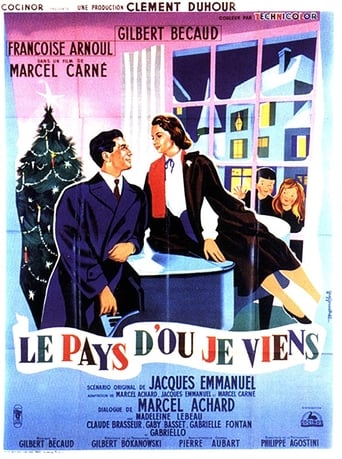
Bécaud's career further blossomed with hits like "La Corrida" (1956) and "Le Jour où la Pluie Viendra" (1957), which was later adapted into "The Day the Rains Came" by Jane Morgan. He also made his mark in film, debuting in "Le Pays D'où Je Viens" (1956). Notably, his composition "Et Maintenant" became one of the best-selling singles in French music history, covered by many artists including Elvis Presley and Frank Sinatra. Bécaud married twice, first to Monique Nicholas, with whom he had three children, and later to Kitty Saint-John, fathering two more children. He passed away from cancer at 74, leaving behind a rich legacy in music and performance.