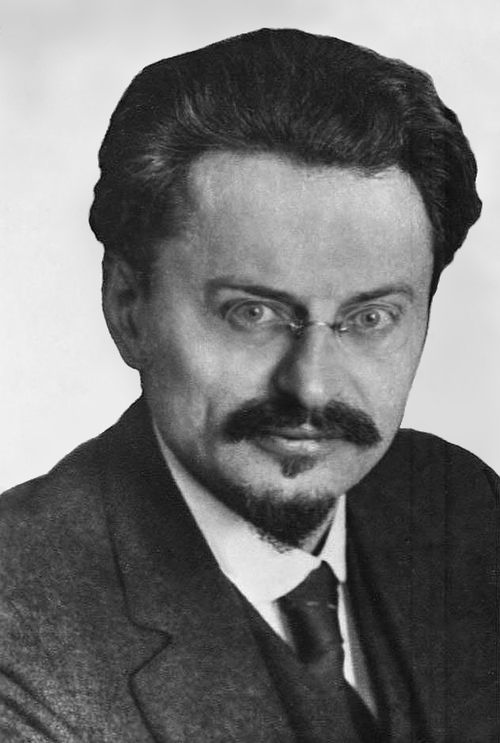
Leon Trotsky
Lev Davidovich Bronstein, widely recognized as Leon Trotsky, was a prominent Russian revolutionary, political figure, journalist, and theorist. Born on November 7, 1879, Trotsky played an instrumental role in the creation of Soviet Russia and the subsequent formation of the Soviet Union. As a committed Marxist, his intellectual contributions laid the groundwork for a significant ideological movement known as Trotskyism, which continues to influence leftist thought.
Trotsky was a key player in the October Revolution of 1917, serving as the leader of the Red Army during the ensuing Civil War, where his strategic insight was crucial to the Bolsheviks' victory. His role in the government included positions such as the People's Commissar for Foreign Affairs and later, the Commissar of War. He was a prolific writer, producing numerous works that critiqued capitalism and advocated for international revolution, with major texts like "The History of the Russian Revolution" and "Permanent Revolution" solidifying his legacy.
Despite his initial prominence, Trotsky's relationship with Joseph Stalin deteriorated, leading to his expulsion from the Communist Party and eventual exile in 1929. He continued to write and organize against Stalinist policies until his assassination in 1940 in Mexico City. Trotsky's ideas remain a vital part of Marxist discourse, inspiring generations of activists and theorists worldwide.