
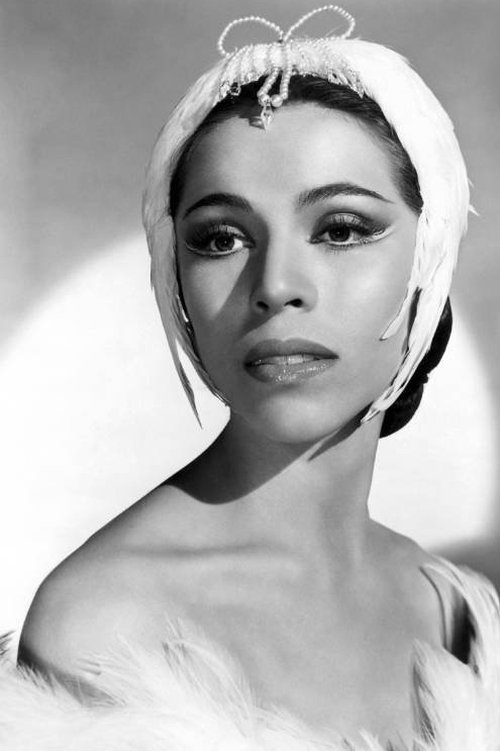
Maria Tallchief
Maria Tallchief, originally named Elizabeth Marie Tall Chief, emerged as a groundbreaking figure in American ballet, recognized as the nation's first prominent prima ballerina. Notably, she was the first Native American to achieve this prestigious title, fundamentally transforming the world of ballet.
Her journey into dance began early; Tallchief began formal training at the tender age of three. At eight, her family moved from Fairfax, Oklahoma, to Los Angeles to nurture her and her younger sister Marjorie's artistic talents. By 17, Tallchief had relocated to New York City, where she sought to join a leading ballet company. Adopting the name Maria Tallchief at the suggestion of her mentors, she soon joined the Ballet Russe de Monte Carlo. It was here that she crossed paths with the renowned choreographer George Balanchine, who later co-founded the New York City Ballet in 1946, making Tallchief its inaugural star.
Together with Balanchine, she redefined ballet with her emotive performances, particularly with her acclaimed portrayal in the 1949 production of The Firebird, which solidified her status as a prima ballerina. Her role as the Sugarplum Fairy in The Nutcracker played a crucial role in elevating the ballet to a beloved American classic.
Tallchief's influence extended globally, as she became the first American to grace the stage at Moscow's Bolshoi Theater and made numerous television appearances prior to her retirement in 1966. Post-retirement, she dedicated herself to promoting ballet in Chicago, serving as the ballet director for the Lyric Opera of Chicago and founding the Chicago City Ballet in 1981.
Her legacy was commemorated with statues in Oklahoma, a National Medal of Arts, induction into the National Women's Hall of Fame, and a Kennedy Center Honor in 1996 for her lifetime contributions. Her remarkable life has inspired several documentaries and biographies.
