Richard Wright
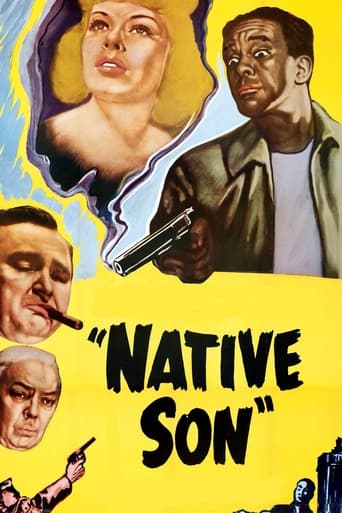
Richard Nathaniel Wright was a pivotal American author whose compelling narratives shed light on the profound injustices faced by African-Americans in a predominantly white society. He garnered widespread acclaim with his debut novel, "Native Son," published in 1940. This groundbreaking work follows the life of Bigger Thomas, a young chauffeur whose suppressed anger and frustration lead to catastrophic consequences. "Native Son" not only captivated readers but was also adapted into a play directed by Orson Welles in 1941, a film in which Wright portrayed Bigger in 1951, and a subsequent adaptation in 1986.
Wright's literary contributions extend beyond "Native Son" and include his autobiographical account, "Black Boy," released in 1945, as well as notable novels like "The Outsider" (1953) and "The Long Dream" (1958). His short story collections, such as "Uncle Tom's Children" (1938) and "Eight Men" (1961), further reflect his powerful storytelling. In addition, he explored philosophical themes in works like "Black Power" (1954) and "White Man, Listen!" (1957).
Born near Natchez, Mississippi, in 1908, Wright was largely self-taught and began his writing journey after relocating to Chicago in the late 1920s. He was affiliated with the Communist Party from 1932 to 1944, later expressing his disillusionment with it in "The God That Failed" (1949). In 1946, Wright settled in Paris, where he lived until his passing in 1960. His second memoir, "American Hunger," was published posthumously in 1977, solidifying his legacy as a significant literary figure.